
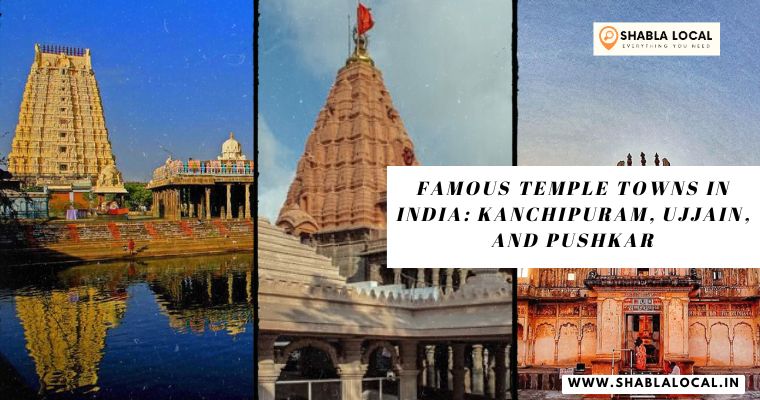
Famous Temple Towns in India: Kanchipuram, Ujjain, and Pushkar
India’s temple towns are not just spiritual hubs but also vibrant centers of culture, history, and architectural grandeur. Kanchipuram, Ujjain, and Pushkar stand out for their sacred temples, rich traditions, and unique festivals, drawing devotees and travelers alike. This blog explores these iconic temple towns, highlighting their key temples, aarti timings, and what makes them must-visit destinations, especially in July when monsoons enhance their charm.
1. Kanchipuram, Tamil Nadu: The City of a Thousand Temples
Kanchipuram, one of India’s seven holiest cities, is renowned for its ancient temples and as a hub for silk sarees. A key stop on the South Indian temple circuit, it is home to significant Shiva and Vishnu temples, earning it the title “City of a Thousand Temples.”
Key Temples
- Kamakshi Amman Temple: Dedicated to Goddess Kamakshi, a form of Parvati, this temple is a Shakti Peeth. Its ornate gopuram and golden chariot are highlights, with the annual Navratri festival drawing crowds.
- Ekambareswarar Temple: Housing one of the five Panchabhuta Lingams (representing Earth), this sprawling temple features a 59-meter gopuram and a 3,500-year-old mango tree believed to grant wishes.
- Kailasanathar Temple: A 7th-century Pallava marvel, this sandstone temple showcases intricate carvings and is dedicated to Lord Shiva.
Temple Timings and Aarti Schedule
- Kamakshi Amman Temple:
- Opens: 5:30 AM, Closes: 12:00 PM; Reopens: 4:00 PM, Closes: 8:30 PM.
- Morning Aarti: 6:00 AM (Abhishekam and Deeparadhana).
- Evening Aarti: 5:30 PM (Deeparadhana).
- Note: Closes briefly from 12:00 PM–4:00 PM for rituals; special darshan (₹100) available.
- Ekambareswarar Temple:
- Opens: 6:00 AM, Closes: 12:30 PM; Reopens: 4:00 PM, Closes: 8:00 PM.
- Morning Aarti: 6:30 AM (Ushathkala Puja).
- Evening Aarti: 6:00 PM (Sayaratchai Puja).
- Note: Sparsh Darshan requires traditional attire (dhoti for men, saree for women).
- Kailasanathar Temple:
- Opens: 6:00 AM, Closes: 6:30 PM.
- Morning Aarti: 7:00 AM.
- Evening Aarti: 5:30 PM.
- Note: Managed by the ASI, it allows photography but prohibits rituals inside.
Why Visit in July?
Monsoon rains enhance Kanchipuram’s lush surroundings, and the cooler weather is ideal for temple tours. The annual float festival at Varadaraja Perumal Temple, though typically in May, may extend celebrations into July.
Things to Do
- Shop for Kanchipuram silk sarees in local markets.
- Explore the Vedanthangal Bird Sanctuary (40 km away) for monsoon birdwatching.
- Attend the Panguni Uthiram festival for cultural performances (dates vary).
How to Reach
- By Air: Chennai International Airport (70 km), then taxi or bus (2 hours).
- By Train: Kanchipuram Railway Station, connected to Chennai and Bengaluru.
- By Road: Well-linked via NH48 from Chennai or Vellore.
2. Ujjain, Madhya Pradesh: The Sacred City of Mahakaleshwar
Ujjain, one of the Sapta Puri (seven holy cities), is a spiritual powerhouse on the banks of the Shipra River. Famous for the Mahakaleshwar Jyotirlinga and the Kumbh Mela (held every 12 years), it’s a center of Shaivism and Vedic learning.
Key Temples
- Mahakaleshwar Temple: One of the 12 Jyotirlingas, dedicated to Lord Shiva as Mahakal (Lord of Time). Its Bhasma Aarti, using sacred ash, is a unique ritual attracting thousands.
- Harsiddhi Temple: A Shakti Peeth dedicated to Goddess Harsiddhi, known for its vibrant Navratri celebrations.
- Kal Bhairav Temple: Dedicated to Shiva’s fierce form, this temple is famous for its liquor offerings to the deity.
Temple Timings and Aarti Schedule
- Mahakaleshwar Temple:
- Opens: 4:00 AM, Closes: 11:00 PM.
- Bhasma Aarti: 4:00 AM–6:00 AM (requires online booking at shrimahakaleshwar.com, ₹1,500 for entry).
- Morning Aarti: 7:00 AM (Shringar Aarti).
- Evening Aarti: 7:00 PM (Sandhya Aarti).
- Note: Bhasma Aarti is restricted to traditional attire; mobile phones are prohibited inside.
- Harsiddhi Temple:
- Opens: 5:00 AM, Closes: 7:00 PM.
- Morning Aarti: 6:00 AM.
- Evening Aarti: 6:30 PM.
- Note: Free darshan; donations accepted for puja.
- Kal Bhairav Temple:
- Opens: 6:00 AM, Closes: 8:00 PM.
- Morning Aarti: 7:00 AM.
- Evening Aarti: 7:00 PM.
- Note: Liquor offerings are part of the ritual but not mandatory.
Why Visit in July?
July marks the start of Shravan, a sacred month for Shiva devotees, making Ujjain a focal point for pilgrims. The monsoon adds a mystical charm to the Shipra River ghats.
Things to Do
- Attend the Bhasma Aarti at Mahakaleshwar (book in advance).
- Visit the Vedh Shala Observatory, a historic astronomical site.
- Explore the ghats during Shravan for vibrant rituals.
How to Reach
- By Air: Devi Ahilya Bai Holkar Airport, Indore (55 km), then taxi or bus (1.5 hours).
- By Train: Ujjain Junction, connected to Delhi, Mumbai, and Bhopal.
- By Road: NH52 links Ujjain to Indore and Bhopal.
3. Pushkar, Rajasthan: The Holy Lake Town
Pushkar, a serene town in Rajasthan, is one of India’s oldest pilgrimage sites, centered around the sacred Pushkar Lake and the rare Brahma Temple. Known for its spiritual vibe and the annual Pushkar Camel Fair, it’s a blend of devotion and desert charm.
Key Temples
- Brahma Temple: One of the few temples dedicated to Lord Brahma, the creator god, with a four-faced idol and a serene lakeside setting.
- Savitri Temple: Perched on a hill, dedicated to Brahma’s consort, offering panoramic views of Pushkar.
- Varaha Temple: Dedicated to Vishnu’s boar avatar, this temple is significant for its ancient origins.
Temple Timings and Aarti Schedule
- Brahma Temple:
- Summer (April–September): 6:30 AM–8:30 PM.
- Winter (October–March): 7:00 AM–8:00 PM.
- Morning Aarti: 7:00 AM (Mangal Aarti).
- Evening Aarti: 7:30 PM (Sandhya Aarti).
- Note: Non-Hindus can enter but must respect temple customs; photography is restricted.
- Savitri Temple:
- Opens: 5:00 AM, Closes: 9:00 PM.
- Morning Aarti: 6:00 AM.
- Evening Aarti: 6:30 PM.
- Note: Accessible via a 1-hour trek or ropeway (₹100 round trip).
- Varaha Temple:
- Opens: 6:00 AM, Closes: 8:00 PM.
- Morning Aarti: 6:30 AM.
- Evening Aarti: 7:00 PM.
- Note: Free entry; modest attire required.
Why Visit in July?
Monsoon rains rejuvenate Pushkar’s desert landscape, making the lake and ghats picturesque. July is ideal for a quieter visit before the tourist-heavy Camel Fair in November.
Things to Do
- Take a holy dip in Pushkar Lake’s 52 ghats.
- Trek or take the ropeway to Savitri Temple for sunrise views.
- Shop for handicrafts and Rajasthani jewelry in Pushkar’s bazaars.
How to Reach
- By Air: Jaipur International Airport (150 km), then taxi or bus (3 hours).
- By Train: Ajmer Junction (15 km), then auto-rickshaw or taxi to Pushkar.
- By Road: NH48 connects Pushkar to Jaipur and Ajmer.
Tips for Visiting Temple Towns in July
- Pack for Monsoon: Carry umbrellas, raincoats, and sturdy footwear for wet conditions.
- Book Aarti in Advance: For Mahakaleshwar’s Bhasma Aarti, reserve online; other temples may require early arrival for aarti.
- Dress Modestly: Wear traditional attire (dhoti/kurta for men, saree/salwar for women) for special darshan; cover shoulders and knees.
- Respect Local Customs: Follow temple rules, especially in Pushkar, where non-Hindus must avoid touching idols.
- Explore Beyond Temples: Each town offers cultural experiences—Kanchipuram’s sarees, Ujjain’s ghats, and Pushkar’s markets.
- Check Festival Dates: Shravan in Ujjain and pre-festival preparations in Pushkar may align with July, so plan accordingly.
Conclusion
Kanchipuram, Ujjain, and Pushkar are jewels in India’s spiritual crown, each offering a unique blend of divinity, history, and culture. Kanchipuram’s ancient temples dazzle with Pallava artistry, Ujjain’s Mahakaleshwar pulsates with Shiva’s eternal energy, and Pushkar’s Brahma Temple offers serene devotion by the sacred lake. Visiting in July, with its monsoon charm, enhances their allure, from misty ghats to lush landscapes. Whether you seek the divine blessings of Kamakshi, the transformative Bhasma Aarti, or a dip in Pushkar Lake, these temple towns promise a soul-stirring journey. Plan your visit with the aarti timings in mind, immerse in their sacred rituals, and carry home the timeless peace of India’s spiritual heritage.
Benefits of Shabla Local
- Discover Tourist Places Across India
- Find information about the Tourist places.
- Read reviews and comments of the people.
- Promote your business on our website.
- Make it easy to find your business.
- Sell your product directly to customers.
Our Services
- Business Promotion
- Business Branding
- Digital Marketing
- Social Engineering
- Customer Excellence
- Customer Support
Disclaimer: Listings of businesses on this page are provided as a service from the Shabla Local. Shabla Local is only acting as an aggregator for the business listing, and can’t accept responsibility for any errors or omissions – Please ALWAYS recheck for any updates, particularly regarding contacts, price & offers. Listing or omission of any particular listing should not be taken as an endorsement or otherwise by Shabla Local of the organization or of the policies and practices embodied in the job specification or its outcome in practice.
Sources: All listings on this website, including content and images, are driven by the official website and other public sources.
Contact Shabla Local Team for more information, WhatsApp us on : +918864002802