
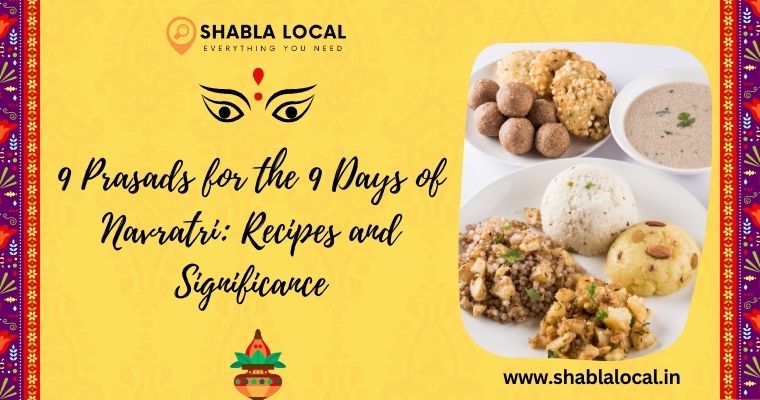
9 Prasads for the 9 Days of Navratri: Recipes and Significance
Navratri is a time for devotion and celebration, with each day dedicated to a different form of Goddess Durga. The prasads offered on these days not only hold spiritual significance but also add to the festive cheer. Here’s a detailed guide to the prasads and their recipes for each day of Navratri:
Day 1: Shailputri – The Mountain Daughter
Prasad: Ghee and Puri
Ghee:
1. Ingredients: Butter (unsalted)
2. Method:
• Heat butter in a saucepan until it melts.
• Continue heating until the milk solids settle at the bottom and the ghee turns golden.
• Strain the ghee into a container and let it cool.
Puri:
1. Ingredients: Whole wheat flour, salt, water, oil (for deep-frying).
2. Method:
• Mix whole wheat flour, salt, and a little water to form a soft dough.
• Roll out the dough into thin circles.
• Deep-fry the circles in hot oil until golden brown and puffed.
Significance: Ghee symbolizes purity and enlightenment, while puri represents the universe and its vastness.
Day 2: Brahmacharini – The Celibate
Prasad: Kuttu Ka Halwa
1. Ingredients: Buckwheat flour, ghee, milk, sugar, cardamom powder, saffron strands.
2. Method:
• Roast buckwheat flour in a dry skillet until fragrant.
• Add ghee and cook until the flour turns golden brown.
• Stir in milk and sugar, cooking until the mixture thickens.
• Add cardamom powder and saffron strands for flavor.
Significance: Kuttu ka halwa, made from buckwheat flour, reflects Brahmacharini’s ascetic lifestyle and devotion.
Day 3: Chandraghanta – The Bell-Ringer
Prasad: Makhane Ki Kheer
1. Ingredients: Lotus seeds, milk, sugar, cardamom powder, almonds, pistachios
2. Method:
• Soak lotus seeds in water for a few hours.
• Grind the soaked lotus seeds into a paste.
• Cook the paste in milk with sugar and cardamom powder until it thickens.
• Garnish with chopped almonds and pistachios.
Significance: Makhane ki kheer symbolizes purity and peace, reflecting Chandraghanta’s serene nature.
Day 4: Kushmanda – The Pumpkin-Wielder
Prasad: Malpua
1. Ingredients: Flour, milk, sugar, cardamom powder, saffron strands, ghee (for frying)
2. Method:
• Mix flour, milk, sugar, cardamom powder, and a pinch of saffron in a bowl to make a batter.
• Rest the batter for a few hours.
• Heat ghee in a skillet and pour small ladlefuls of batter into it.
• Cook until golden brown and crispy on both sides.
Significance: Malpua represents Kushmanda’s ability to create and sustain the universe, celebrating abundance.
Day 5: Skandmata – The Mother of Skanda
Prasad: Sabudana Khichdi
1. Ingredients: Sabudana (tapioca pearls), ghee, cumin seeds, chopped vegetables (potatoes, peanuts), salt, lemon juice
2. Method:
• Soak sabudana pearls in water for a few hours.
• Heat ghee in a skillet and add cumin seeds.
• Add chopped vegetables and cook until softened.
• Add the soaked sabudana pearls and cook until they become translucent.
• Season with salt and lemon juice.
Significance: Sabudana khichdi reflects Skandmata’s nurturing and motherly qualities.
Day 6: Katyayani – The Warrior Goddess
Prasad: Arbi Ki Sabzi
1. Ingredients: Arbi (taro root), ghee, cumin seeds, chopped onions, tomatoes, spices (turmeric, coriander, cumin powder)
2. Method:
• Boil arbi root vegetables until tender, then peel and cut into pieces.
• Heat ghee in a skillet and add cumin seeds.
• Add chopped onions, tomatoes, and spices, cooking until softened.
• Add the boiled arbi and cook until the flavors blend.
Significance: Arbi ki sabzi represents Katyayani’s strength and power.
Day 7: Kaalratri – The Dark Night
Prasad: Puri and Kaladi
Kaladi:
1. Ingredients: Black gram flour, ghee, milk, sugar, cardamom powder, saffron strands
2. Method:
• Roast black gram flour in a dry skillet until fragrant.
• Add ghee and cook until the flour turns golden brown.
• Stir in milk and sugar, cooking until the mixture thickens.
• Add cardamom powder and saffron strands for flavor.
Significance: Kaladi, made from black gram flour, symbolizes the Goddess’s power to dispel darkness and ignorance.
Day 8: Mahagauri – The Great Goddess
Prasad: Paneer Kheer
1. Ingredients: Rice, milk, sugar, cardamom powder, saffron strands, paneer (cottage cheese), almonds, pistachios
2. Method:
• Cook rice in milk until it becomes soft.
• Add sugar, cardamom powder, and saffron strands.
• Add crumbled paneer and cook for a few more minutes.
• Garnish with chopped almonds and pistachios.
Significance: Paneer kheer represents purity and the Goddess’s ability to grant blessings.
Day 9: Siddhidatri – The Goddess of Accomplishments
Prasad: Til Ladoo
1. Ingredients: Sesame seeds, jaggery, ghee
2. Method:
• Roast sesame seeds in a dry skillet until fragrant.
• Grind the roasted sesame seeds into a powder.
• Add jaggery and ghee, mixing well.
• Shape the mixture into balls.
Significance: Til ladoo signifies accomplishment and success, embodying Siddhidatri’s attributes of achievement.
Additional Tips:
• Fasting Guidelines: Use fasting-friendly ingredients like buckwheat, tapioca pearls, and water chestnuts.
• Purity and Hygiene: Ensure that all utensils and ingredients are clean and pure.
• Devotion: The essence of preparing and offering these prasads is the devotion and reverence with which they are made and presented.
Additional Considerations for Navratri Prasads:
• Dietary restrictions: For those with dietary restrictions, such as vegetarianism or veganism, there are many plant-based alternatives available.
• Regional variations: While the prasads mentioned above are common across India, there may be regional variations in the ingredients and preparation methods.
• Personal preferences: Ultimately, the best prasad is the one that you enjoy and that brings you joy.
• Spiritual significance: Beyond the culinary aspect, offering prasad to the goddess is a way to connect with the divine and express gratitude. By understanding the significance of each prasad and preparing it with care, you can enhance your Navratri experience and deepen your connection with the divine feminine.
Navratri, a nine-day festival dedicated to the Goddess Durga, is celebrated with great fervor across India. It’s a time of spiritual devotion, cultural festivities, and vibrant celebrations. Here are some popular places to visit in India during Navratri:
1. Gujarat:
Navratri is a nine-day festival dedicated to the Goddess Durga, celebrated with great fervor across India. During this time, many people visit temples dedicated to the goddess to offer prayers and offerings. Here are some popular temples to visit during Navratri:
1. Dakshineswar Kali Temple, Kolkata, West Bengal:
This temple is one of the most famous temples in India, dedicated to Goddess Kali. It is believed that the goddess appeared to Ramakrishna Paramhansa here.
Click on the below link for more detail:
https://gvs.yzy.mybluehost.me/website_60fc5668/dakshineswar-kali-temple/
2. Vaishno Devi Shrine, Jammu and Kashmir:
This sacred shrine is a major pilgrimage site for Hindus, attracting thousands of devotees during Navratri. It is believed that the goddess appears in three different forms here
Click on the below link for more detail
https://gvs.yzy.mybluehost.me/website_60fc5668/maa-vaishno-devi-mandir/
3. Jwalamukhi Temple, Himachal Pradesh:
- This temple is dedicated to the Goddess Jwala, who is believed to manifest as a flame. It is a popular pilgrimage site for Hindus, especially during Navratri.
Click on the below link for more detail:
https://gvs.yzy.mybluehost.me/website_60fc5668/jwalamukhi-temple-himachal-pradesh/
4. Chamundeshwari Temple, Karnataka:
- This temple is located on Chamundi Hill, and it is dedicated to Goddess Chamundeshwari, a fierce form of Goddess Durga. It is a popular pilgrimage site, especially during Navratri.
Click on the below link for more detail:
https://gvs.yzy.mybluehost.me/website_60fc5668/shri-chamundeshwari-thayi-temple/
5. Mumba Devi Temple, Mumbai, Maharashtra:
- This temple is dedicated to Goddess Mumba, the patron goddess of Mumbai. It is a popular pilgrimage site, especially during Navratri.
Click on the below link for more detail:
https://gvs.yzy.mybluehost.me/website_60fc5668/mumba-devi-temple/
6. Durga Temple, Varanasi, Uttar Pradesh:
- Dedicated to Goddess Durga, this temple is an important site for Navratri celebrations. It is renowned for its beautiful idol of the Goddess and the energetic atmosphere during the festival.
Click on the below link for more detail:
https://gvs.yzy.mybluehost.me/website_60fc5668/places-search/?ad_title=Durga+Temple
7. Kalkaji Mandir, Delhi:
- This ancient temple dedicated to Goddess Kali is a central spot for Navratri festivities. It’s known for its vibrant atmosphere and devotional activities.
Click on the below link for more detail:
https://gvs.yzy.mybluehost.me/website_60fc5668/kalka-ji-mandir/
These are just a few examples of the many places you can visit during Navratri. Each region has its unique traditions and celebrations, offering a diverse and unforgettable experience.
Conclusion
The nine prasads of Navratri not only reflect the diversity of Indian cuisine but also embody the essence of devotion and spirituality associated with the festival. Each prasad is a testament to the rich culinary traditions of India and the deep reverence of devotees towards the goddess. As you prepare and offer these prasads, may they bring joy, prosperity, and divine blessings into your life. Happy Navratri!
Benefits of Joining Shabla Local
- Finding Tourist places in different cities.
- Find information about the Tourist places.
- Read reviews and comments of the people.
- Promote your business on our website.
- Make it easy to find your business.
- Sell your product directly to customers.
Our Services
- Business Promotion
- Business Branding
- Digital Marketing
- Social Engineering
- Customer Excellence
- Customer Support
Disclaimer: Listings of businesses on this page are provided as a service from the Shabla Local. Shabla Local is only acting as an aggregator for the business listing, and can’t accept responsibility for any errors or omissions – Please ALWAYS recheck for any updates, particularly regarding contacts, price & offers. Listing or omission of any particular listing should not be taken as an endorsement or otherwise by Shabla Local of the organization or of the policies and practices embodied in the job specification or its outcome in practice.
Sources: All listings on this website, including content and images, are driven by the official website and other public sources.
Contact Shabla Local Team for more information, WhatsApp us on : +918864002802