
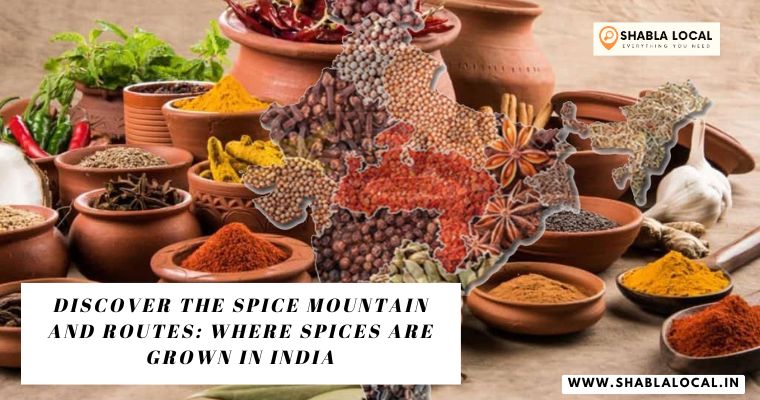
Discover the Spice Mountain and Routes: Where Spices are Grown in India
India, often called the “Land of Spices,” has a rich history of spice cultivation and trade that dates back thousands of years. From the lush hills of Kerala to the arid plains of Rajasthan, the country’s diverse climates and terrains create perfect conditions for growing a wide variety of spices. This blog takes you on a flavorful journey through India’s spice-growing regions, highlighting the famous “Spice Mountain” and the ancient spice routes that shaped global trade.
The Spice Mountain: Cardamom Hills
Nestled in the Western Ghats of Kerala, the Cardamom Hills are often referred to as India’s “Spice Mountain.” This range, with elevations between 600 and 1,300 meters, is renowned for producing some of the world’s finest cardamom, earning it the title “Queen of Spices.” The hills’ cool, humid climate and consistent rainfall make them ideal for cultivating not only cardamom but also black pepper, cloves, nutmeg, and ginger.
Located primarily in Kerala’s Idukki district, the Cardamom Hills are a hub of biodiversity and spice farming. The region’s spice plantations attract visitors who wander through lush farms, inhaling the aroma of fresh spices. The hills also played a pivotal role in the ancient spice trade, with cardamom and pepper from this area reaching far-off lands like Rome and Greece centuries ago.
Key Spice-Growing Regions and Their Hills
India’s spices are grown across various regions, each with unique terrains and climates. Below are some of the prominent spice-growing areas, along with the hills or landscapes where they thrive:
1. Kerala: The Spice Garden of India
- Hills: Cardamom Hills, Anamalai Hills, Wayanad Hills
- Spices: Black pepper, cardamom, ginger, turmeric, cloves, cinnamon, nutmeg
- Details: Kerala, known as the “Spice Capital of India,” has been a global spice hub since ancient times. The Cardamom Hills in Idukki and Wayanad Hills are famous for cardamom and pepper, while the Anamalai Hills support turmeric and ginger. Kerala’s tropical climate and fertile soil make it a leader in spice exports, with black pepper, dubbed “Black Gold,” historically driving trade through ports like Muziris.
2. Tamil Nadu: The Southern Spice Belt
- Hills: Anamalai Hills, Palani Hills
- Spices: Cardamom, turmeric, cloves, coriander
- Details: Tamil Nadu’s Anamalai and Palani Hills support spice cultivation, particularly cardamom and turmeric. Coimbatore and Guntur are key areas for turmeric, which thrives in well-drained sandy and clay soils. The state’s spice farms contribute significantly to India’s export market.
3. Karnataka: The Pepper and Cardamom Hub
- Hills: Coorg Hills, Chikmagalur Hills
- Spices: Black pepper, cardamom, turmeric
- Details: Karnataka’s Coorg and Chikmagalur Hills are ideal for black pepper and cardamom due to their tropical climate and rainfall of 200–300 cm. The Kannur district is a major pepper producer, making India the second-largest pepper exporter globally after Indonesia.
4. Andhra Pradesh: The Turmeric and Chili Powerhouse
- Hills: Nallamala Hills
- Spices: Turmeric, chili, coriander
- Details: Andhra Pradesh leads in turmeric production, contributing nearly half of India’s total output. The Nallamala Hills provide suitable conditions for turmeric, which grows in red, black, or alluvial soils. Guntur is famous for its GI-tagged Sannam Chili.
5. Rajasthan: The Arid Spice Lands
- Hills: Aravalli Hills
- Spices: Coriander, fenugreek, cumin, mustard
- Details: Despite its dry climate, Rajasthan’s Aravalli Hills support fenugreek, coriander, and cumin. The state is a major producer of fenugreek, grown mainly in winter, and mustard, which is essential in Indian kitchens.
6. Northeast India: The Ginger and Chili Frontier
- Hills: Khasi Hills, Garo Hills, Jaintia Hills
- Spices: Ginger, turmeric, chili
- Details: States like Mizoram, Meghalaya, and Assam, with hills like the Khasi and Garo, are major ginger producers. India supplies 80% of the world’s ginger, with Kerala and Meghalaya leading. The region’s subtropical climate is perfect for these crops.
7. Kashmir: The Saffron Haven
- Hills: Pir Panjal Range
- Spices: Saffron
- Details: Kashmir’s Pir Panjal Range, particularly in Pampore, Srinagar, and Kishtwar, is the heart of saffron production. This expensive spice, introduced by Persian settlers in the 12th century, is used in Kashmiri dishes like Rogan Josh and desserts like Kheer.
The Spice Routes: A Historical Journey
The spice trade in India began around 3000 BCE, with maritime routes known as the Spice Routes or Maritime Silk Roads. These routes connected India to the Middle East, Europe, and Southeast Asia, facilitating the exchange of spices like black pepper, cardamom, and cinnamon. Key aspects include:
- Muziris Port (Kerala): The ancient port near Kochi was the starting point of the spice trade, linking India to over 30 countries. Spices from the Cardamom Hills were shipped from here to Rome, Greece, and Egypt.
- Silk Road Connection: Spices traveled along the Silk Road, with caravans carrying them from India to Central Asia and Europe. Arab traders dominated this trade for centuries, maintaining a monopoly until the 15th century.
- European Exploration: The quest for direct spice routes led to Vasco da Gama’s arrival on Kerala’s Malabar Coast in 1498, bypassing Arab middlemen. This marked the beginning of European dominance in the spice trade, with the Portuguese, Dutch, and British establishing colonies in spice-rich regions like Kerala and Karnataka.
- Colonial Impact: The British East India Company monopolized spice production in Kerala’s Cardamom Hills and Karnataka, introducing large-scale plantations for pepper, cardamom, and cinnamon. These routes shaped global economies and cuisines.
Modern Spice Trade and Challenges
Today, India is the world’s largest producer, consumer, and exporter of spices, producing 10.87 million tonnes in 2021–22 and exporting $3.73 billion worth in 2022–23. The Spices Board of India aims for $10 billion in exports by 2030, using technologies like cloud-based e-auctions for cardamom in Kerala.
However, challenges persist:
- Climate Change: Extreme weather, floods, and droughts threaten spice crops, especially in Kerala and Andhra Pradesh.
- Sustainability: Small-scale farmers face income fluctuations due to market volatility.
- Processing and Storage: Proper handling is crucial to maintain spices’ therapeutic properties, as highlighted by the Ministry of AYUSH for their role in health, including COVID-19 prevention.
Conclusion
From the misty Cardamom Hills to the ancient Spice Routes, India’s spice legacy is a blend of geography, history, and culture. The hills of Kerala, Tamil Nadu, Karnataka, and beyond continue to produce spices that flavor global cuisines and drive economic prosperity. As you savor a curry or chai, remember the journey of these spices—from the slopes of India’s hills to your plate, carrying centuries of tradition and trade.
Explore the Cardamom Hills on a spice plantation tour in Kerala or trace the Spice Routes through Kerala’s historic ports for a taste of India’s flavorful heritage!
Benefits of Shabla Local
- Discover Tourist Places Across India
- Find information about the Tourist places.
- Read reviews and comments of the people.
- Promote your business on our website.
- Make it easy to find your business.
- Sell your product directly to customers.
Our Services
- Business Promotion
- Business Branding
- Digital Marketing
- Social Engineering
- Customer Excellence
- Customer Support
Disclaimer: Listings of businesses on this page are provided as a service from the Shabla Local. Shabla Local is only acting as an aggregator for the business listing, and can’t accept responsibility for any errors or omissions – Please ALWAYS recheck for any updates, particularly regarding contacts, price & offers. Listing or omission of any particular listing should not be taken as an endorsement or otherwise by Shabla Local of the organization or of the policies and practices embodied in the job specification or its outcome in practice.
Sources: All listings on this website, including content and images, are driven by the official website and other public sources.
Contact Shabla Local Team for more information, WhatsApp us on : +918864002802